Explore our curated collection of articles on climate-smart superfoods, sustainable agriculture, and East African crops.
A comprehensive review on finger millet (Eleusine coracana (L.) Gaertn): A gluten-free superfood and feed
Highlights
•
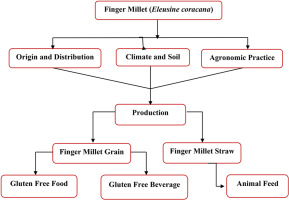
Finger millet (Eleusine coracana) is a gluten free, forgotten, nutritious, celiac friendly food in Eritrea.
•
Finger millet is a healthy food rich in carbohydrates, dietary fibre, vitamins, mineral and phytochemical compositions.
•
Highly esteemed for making gluten free beverages including beer and Siwa, a traditional gluten free beverage in Eritrea.
•
Finger millet's straw offer a potential animal feed.
•
Limited research on finger millet agronomic practices, post-harvest handling, nutritional properties, and as animal feed.
The Agronomic, Nutritional, Environmental, and Health Benefits of Teff (Eragrostis tef) as an Underutilized Gluten-Free Superfood and Feed Source
Abstract
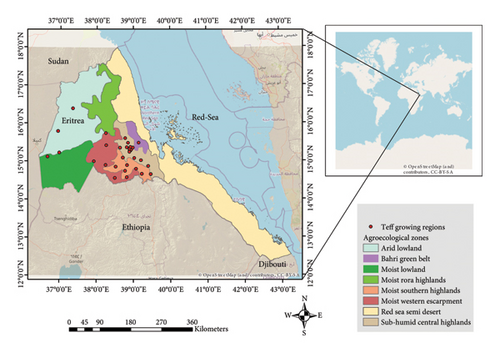
The global prevalence of junk and nonorganic foods has made it increasingly difficult to find sustainable organic food options, despite their potential health benefits. This issue is exacerbated by factors such as production scarcity, climate change, and the widespread availability and affordability of junk food. Additionally, there is a lack of research and attention toward orphan crops, which have high nutritional value and significant health benefits, resulting in food and nutrition insecurity. One such underutilized crop is teff, a small grain cereal grown in Eritrea that is highly nutritious, resilient to climate variability, gluten-free, and rich in dietary fiber. Teff requires low agricultural input, making it a superfood for humans and a valuable animal feed source. The lack of scientific research on teff’s agronomic characteristics, yield potentials, and nutritional benefits hinders its global recognition and distribution. To address this, the Addey Agricultural and Food Cooperative Research and Development team has reviewed existing scientific knowledge on teff. This review covers the botanical description, origin, production, climatic and soil requirements, agronomic practices, and improvement techniques of teff. Also, we explore teff’s nutritional and phytochemical composition, potential health benefits, and use as animal feed. The review highlights teff’s global potential and identifies gaps in current farming practices, recommending modern, technology-based methods for sustainable production and productivity.